Water Bath vs Pressure Canning: Thermodynamic Saturated Steam, Altitude Corrections, and Chemical Acidification
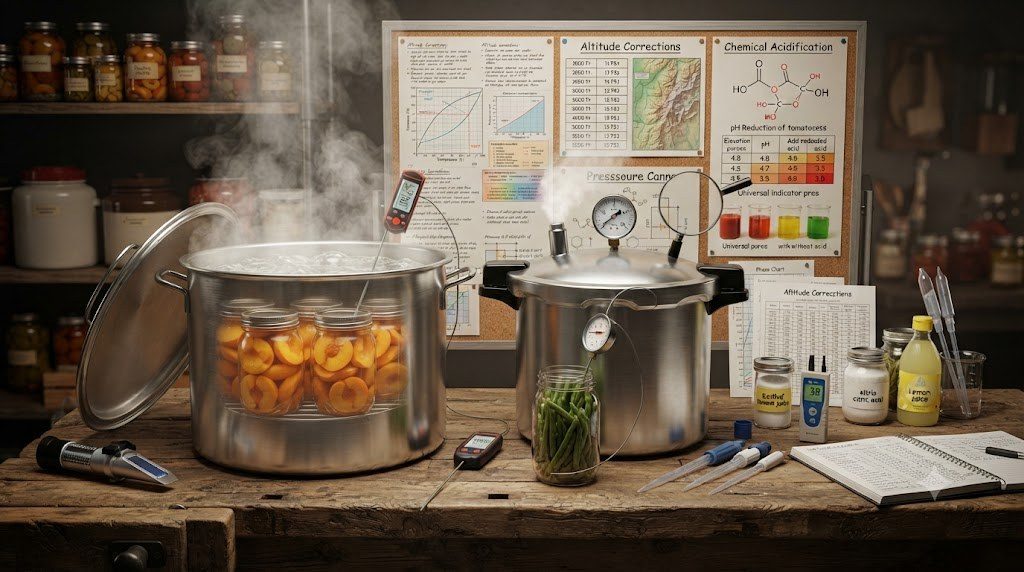
In home and artisanal food preservation, canning is strictly divided into two distinct engineering regimes: Atmospheric Boiling Water Bath Canning ($100^\circ\text{C}$ / $212^\circ\text{F}$) and Pressurized Steam Canning ($116^\circ\text{C}$ to $121^\circ\text{C}$ / $240^\circ\text{F}$ to $250^\circ\text{F}$). The selection between these two methodologies is not a matter of culinary preference or convenience; it is an absolute physical necessity … Read more
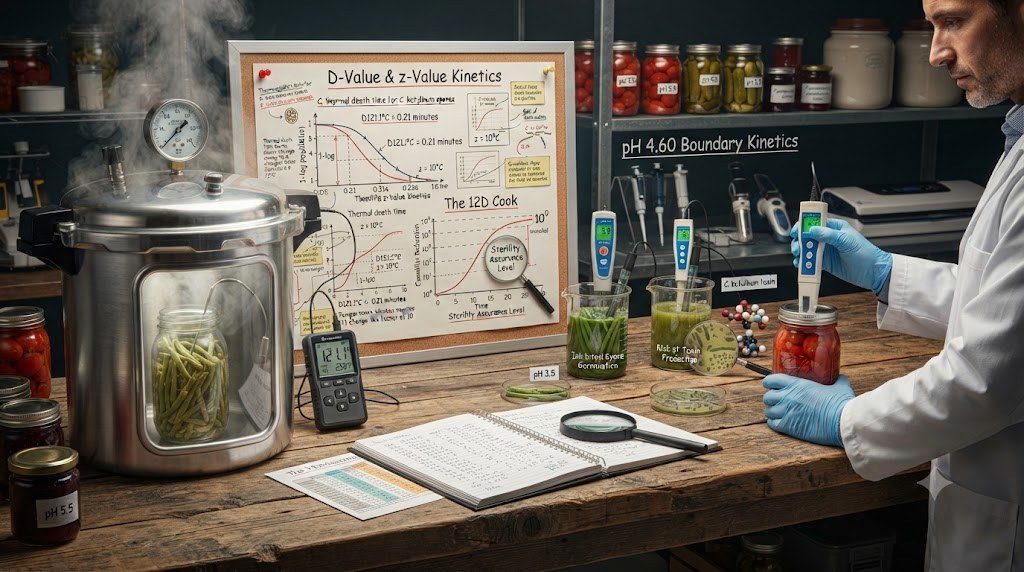
Canning Microbiology & Clostridium botulinum: D-Values, z-Values, the 12D Cook, and pH 4.60 Boundary Kinetics

Of all the food preservation disciplines practiced in modern culinary science, none carries higher life-or-death stakes than Thermal Hermetic Canning. Invented by Nicolas Appert in 1809 to sustain Napoleon’s armies and scientifically elucidated by Louis Pasteur half a century later, canning seals perishable foods inside gas-impermeable containers (glass jars or tinplate steel cans) and applies … Read more

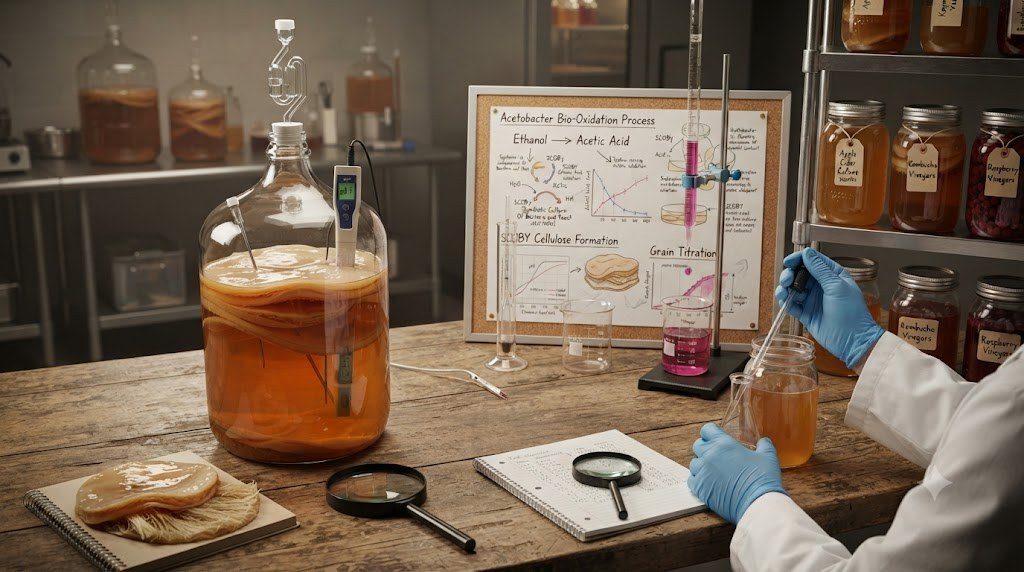
Vinegar Acetification & Kombucha Symbiosis: Acetobacter Bio-Oxidation, SCOBY Cellulose, and Grain Titration

While lactic acid fermentation operates under strictly anaerobic conditions, the biological synthesis of culinary vinegars represents nature’s premier Obligate Aerobic Bio-Oxidation. Long celebrated as both an indispensable culinary acidulant and a powerful antimicrobial preservative, Vinegar (from the Old French vin aigre, “sour wine”) is produced through a two-stage biological cascade: first, yeasts ferment plant sugars … Read more

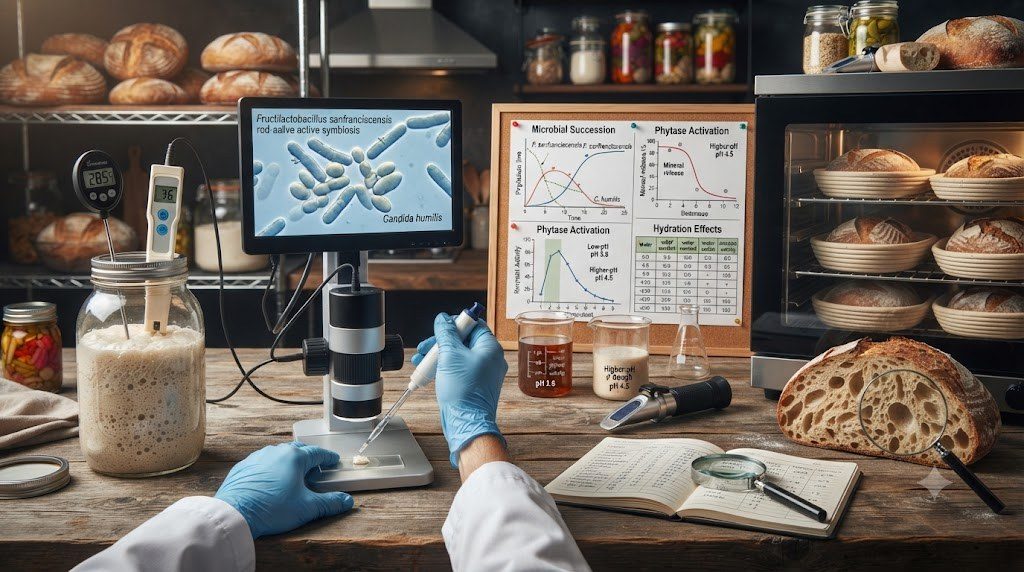
Wild Sourdough Microbiology: Fructilactobacillus sanfranciscensis Symbiosis, Phytase Activation, and Hydration

In modern industrial baking, commercial loaves of bread are produced using isolated monocultures of fast-acting baker’s yeast (Saccharomyces cerevisiae), driven by chemical dough conditioners and synthetic acidifiers to achieve rapid dough expansion within two hours. In stark contrast, Wild Sourdough Fermentation is an ancient, self-sustaining biological ecosystem—a co-evolved, stable mutualistic consortium comprising millions of wild … Read more

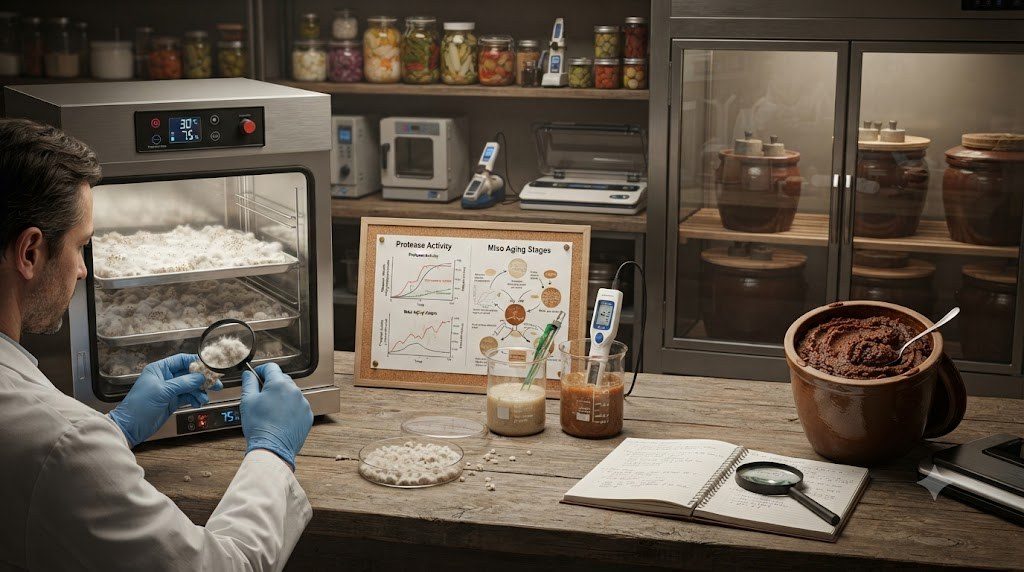
Koji Fermentation (Aspergillus oryzae): Solid-State Fungal Cultivation, Protease Enzymes, and Miso Aging

In Western culinary traditions, fermentation is dominated by bacteria and single-celled yeasts; in East Asian civilization, however, the foundational engine of umami, preservation, and biochemical synthesis for over three millennia has been a filamentous fungal mold: Aspergillus oryzae, affectionately honored in Japan as the national microorganism, Koji-kin. Unlike bacteria that consume simple sugars and secrete … Read more

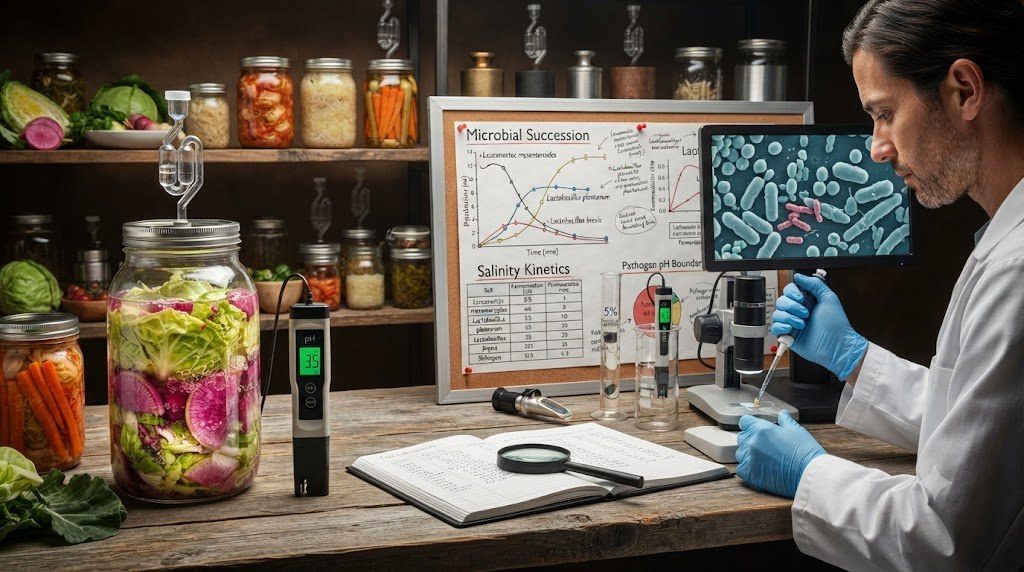
Lactic Acid Fermentation Biochemistry: Microbial Succession, Salinity Kinetics, and Pathogen pH Boundaries

Lactic acid fermentation represents nature’s most sophisticated bio-preservation system. Long before humans discovered bacteria under optical microscopes or understood the biochemistry of organic acids, ancestral communities harnessed spontaneous wild microbial succession to preserve cabbages, cucumbers, olives, and dairy against destructive putrefaction. Today, Lactic Acid Fermentation is recognized as a precise microbiological and thermodynamic discipline: by … Read more

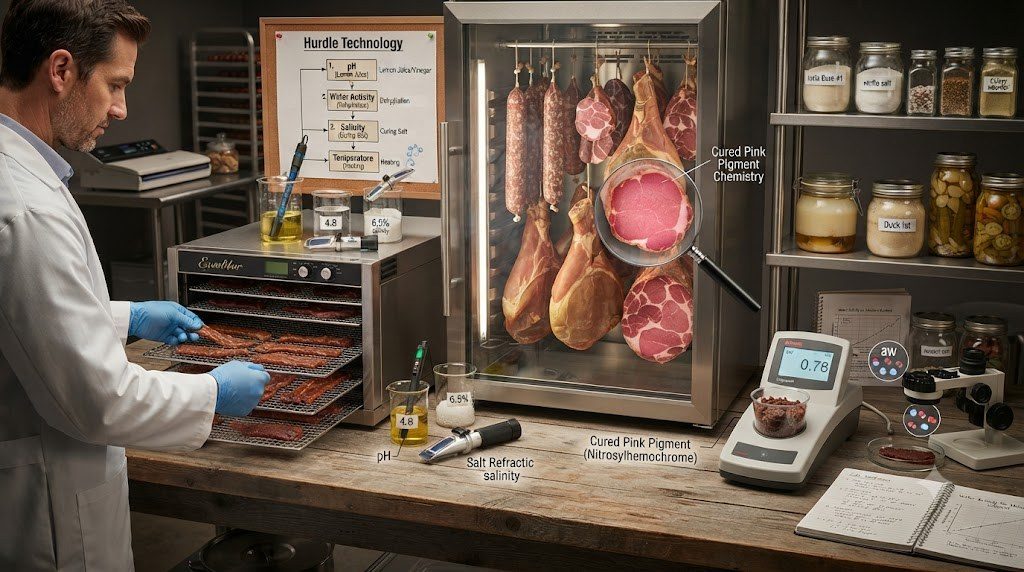
Meat Jerky & Charcuterie Curing Science: Hurdle Technology, Nitrite Myoglobin Chemistry, and Water Activity

Transforming highly perishable raw mammalian skeletal muscle into shelf-stable Dehydrated Jerky and artisan Dry-Cured Charcuterie (such as biltong, prosciutto, coppa, and salumi) is one of the most rigorous bio-chemical balancing acts in culinary science. Raw meat possesses a near-neutral $pH$ ($5.6\text{ to }6.2$), an abundant moisture content ($75\%\text{ water}$), and a water activity of $a_w … Read more

Solar Food Dehydration: Indirect Solar Collectors, Chimney Stack Draft, and Phase Change Material Kilns

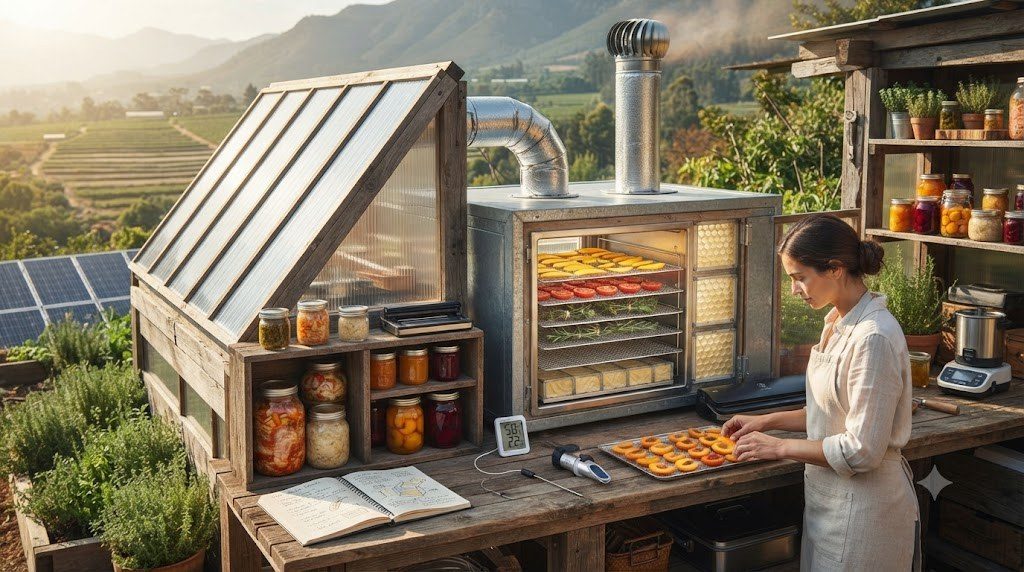
While modern electric food dehydrators rely on fossil-fueled or grid-connected resistance heating coils and electric fans, Solar Food Dehydration taps directly into radiant solar irradiance ($E_e \approx 800\text{ to }1000\text{ W/m}^2$) to drive large-scale, zero-emissions moisture removal. From ancestral sun-drying cloths spread across arid stone plazas to advanced passive chimney-effect convective towers, indirect solar collectors, … Read more

Home Freeze-Drying (Lyophilization) Engineering: Thermodynamic Triple Point, Sublimation, and Vacuum Cycles

While traditional hot-air dehydration relies on convective heat transfer to evaporate liquid moisture directly into circulating air, Freeze-Drying (Lyophilization) represents the pinnacle of modern low-temperature food preservation technology. Originally engineered during World War II to preserve delicate blood plasma and penicillin antibiotics without thermal denaturation, lyophilization operates through an astonishing thermodynamic phenomenon: Ice Sublimation—the direct … Read more

Food Dehydration Science: Water Activity (aw), Sorption Isotherms, and Thermal Enzyme Inactivation

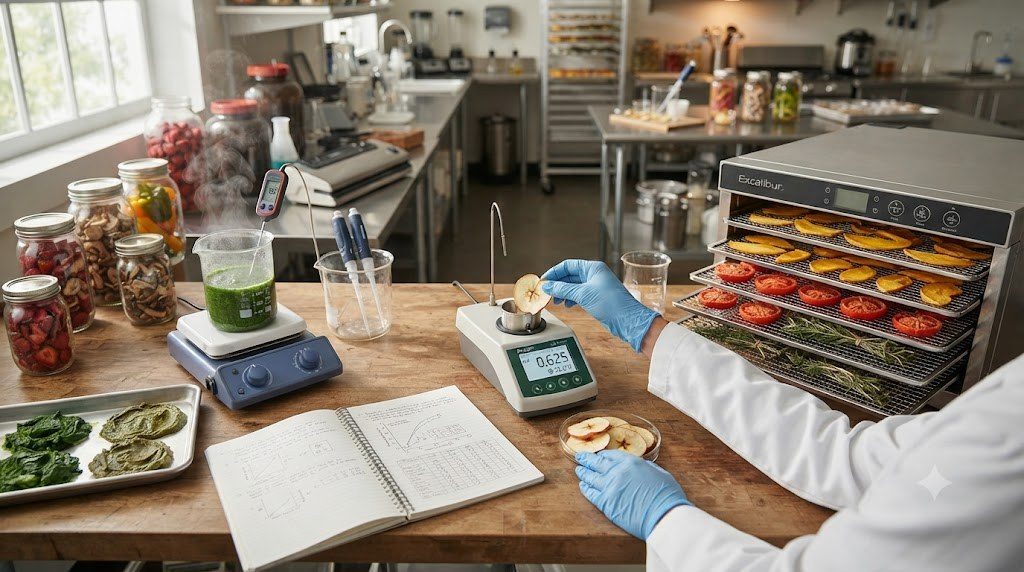
Food dehydration is mankind’s oldest and most thermodynamically elegant preservation discipline. Long before artificial refrigeration, chemical antimicrobials, or hermetic thermal processing existed, civilizations harnessed solar radiation and dry winds to transform perishable flesh, roots, and fruits into stable, lightweight provisions. In contemporary food science, dehydration is defined not merely as “drying until hard,” but as … Read more